For the Frontier of Freedom assignment, we're designing a game in a group of three, which turned out to be quite surprising to me, in a way that I didn't expect we can be so efficient and inspired by each other.
At the beginning - before spring break - we were just talking about each of us could come up with some brainstormed ideas during the break, and have a short meeting after it to see whether we need to form a team to develop one major idea or just to do it individually on our own ideas.
But as expected, no one really did the brainstorming since none of us wanted to waste our break on working at all, which was totally understandable.
So after the break, we gathered together to do a group brainstorming, at which time we hadn't decided to make a team yet. I was even 30 minutes late for that meeting.
Surprisingly, however, the meeting went quite well that we only took like one hour and a half to successfully locate the idea we are interested in and a basic mechanism of playing it, from zero. During the brainstorming, we were just talking about all the sudden ideas that snap in our minds as like we were just casually chatting with each other about games. We talked about games and ideas we've played, heard about and imagined. Soon enough, we all found one of the idea quite interesting, and started further discussing about it in a more serious way. We ended up deciding that was what we want to further develop, and coming up with the basic rules of playing it before we left the meeting.
Unconsciously and unspokenly, we were already working as a team, which I didn't really expect but turned out to be, as I said before, surprisingly efficient and comfortable to me. We told our stories, experiences, thoughts and ideas honestly and unreservedly, which in turn greatly inspired the rest of us to recall and come up with even more, since we were really sharing ourselves instead of deliberately "brainstorming". It felt so good that I didn't consider it as work - well at least normal tedious work. At a certain point, I remembered a word guessing game I played before, and shared with them, we were all interested, and started talking about how we could develop the word guessing idea. Suddenly it just felt right, like we turned into working mode instead of casual chatting immediately, but in a good way. Then we tried to build up that concept by our ideas, one by one, everyone's ideas were so good, even though some of them were not as good as others at first, but those ideas just inspired the rest of us and magically turned into a great idea.
Same thing happened in our second meeting, where we used only like 30 minutes to come up with an initial but complete rule set that we could playtest. The playtest was surprisingly interesting and funny, we laughed so hard and had lots of fun with it, which made me excited about the following meetings.
I haven't systematically analyzed the pros and cons of working in such a team or individually, but I've started to feel it.
Wednesday, March 26, 2014

Tuesday, February 25, 2014
Recommendations for Clash of Clans
Clash of Clans is probably the only game that I have continuously played for 8 months. It is a perfect mix of tower defense and strategy. The most amazing thing of it to me is that as such a interesting and engaging game, it hardly takes me much time.
The basic idea of this game is to train troops to attack other players' or the goblins' (AI) villages to gain loots, in order to build and update one's own village to defend others' attack. A player can have at most 5 builders, any construction or upgrade of a existing building takes some time. I'm currently a high level player so averagely any construction will take at least 1 week. When all the builders are busy, there's nothing much to do except to train troops for attacks, which only need around 5 minutes in half an hour at most.

Having been playing this game for a couple of months, I have accumulated several ideas to improve it to make it even more fun.
Game play:
1. Auto-training scheme function.
Since most players probably have their own strategy and pattern of attacking (with relatively stable portions of different kinds of soldiers and spells), it's troublesome to manually train troops after every single battle.
It would be great if the game allows players to save one or more troop training scheme, so after each attack players only need to tap on the desired scheme and the game would automatically train the troops with a optimized algorithm to make the training time as short as possible.
2. New kinds of troops.
Currently there are basically two kinds of troops - the ground force and air force. Similarly, there are different defense buildings good at defending different forces - cannons and walls for ground troops, air defenses and air mines for air troops, archer towers and tesla towers for both, etc.
I've been imaging if there's a third kinds of troop which could go underground - they might move slowly or have relatively less damage. Correspondingly, there could be a new kinds of defense building like radar - which could detect the invisible enemies underground so that the defense could eliminate them before they sneak into the heart of the village.
It would really interesting to see how such a new kinds of attacking pattern would make the game more variable and strategical.
Social:
1. The game provides replays for recent defense or attacks, as well as sharing replays within a clan. But all these replays will expire after a short time. There's a considerable need for players to save their most memorable or successful replays as long as they want, so they could retaste the accomplishing feeling of successfully defending a mighty attacker or gaining incredible amount of loot in a great battle. Moreover, it would be just perfect if there's a way to directly share such replays to social media like Facebook, Youtube or Vimeo. This sharing feature would definitely make players more proud of their gameplays as well as help advertise the game itself in the players circles.
2. Currently, the only ways of communication within clan members is to chat or to donate a limited number of troops to each other, which has a huge potential to improve.
In my opinion, there can be a in-clan challenge mode - players can post a challenge in their clan for others to try to attack their villages, which would be very helpful for them to improve their village layouts and defense strategies. There might be actually loot for such clan members if they cost their resources on training the troops in the challenge, or it could just be a practice without any loot or using resource-consuming troops. Further, the players could even try to attack themselves with their own troops to see how their defense work and therefore could improve it more.
There are a few other ideas in my notebook, which I'll further consider to make them sound more practical and valuable.
The basic idea of this game is to train troops to attack other players' or the goblins' (AI) villages to gain loots, in order to build and update one's own village to defend others' attack. A player can have at most 5 builders, any construction or upgrade of a existing building takes some time. I'm currently a high level player so averagely any construction will take at least 1 week. When all the builders are busy, there's nothing much to do except to train troops for attacks, which only need around 5 minutes in half an hour at most.
Having been playing this game for a couple of months, I have accumulated several ideas to improve it to make it even more fun.
Game play:
1. Auto-training scheme function.
Since most players probably have their own strategy and pattern of attacking (with relatively stable portions of different kinds of soldiers and spells), it's troublesome to manually train troops after every single battle.
It would be great if the game allows players to save one or more troop training scheme, so after each attack players only need to tap on the desired scheme and the game would automatically train the troops with a optimized algorithm to make the training time as short as possible.
2. New kinds of troops.
Currently there are basically two kinds of troops - the ground force and air force. Similarly, there are different defense buildings good at defending different forces - cannons and walls for ground troops, air defenses and air mines for air troops, archer towers and tesla towers for both, etc.
I've been imaging if there's a third kinds of troop which could go underground - they might move slowly or have relatively less damage. Correspondingly, there could be a new kinds of defense building like radar - which could detect the invisible enemies underground so that the defense could eliminate them before they sneak into the heart of the village.
It would really interesting to see how such a new kinds of attacking pattern would make the game more variable and strategical.
Social:
1. The game provides replays for recent defense or attacks, as well as sharing replays within a clan. But all these replays will expire after a short time. There's a considerable need for players to save their most memorable or successful replays as long as they want, so they could retaste the accomplishing feeling of successfully defending a mighty attacker or gaining incredible amount of loot in a great battle. Moreover, it would be just perfect if there's a way to directly share such replays to social media like Facebook, Youtube or Vimeo. This sharing feature would definitely make players more proud of their gameplays as well as help advertise the game itself in the players circles.
2. Currently, the only ways of communication within clan members is to chat or to donate a limited number of troops to each other, which has a huge potential to improve.
In my opinion, there can be a in-clan challenge mode - players can post a challenge in their clan for others to try to attack their villages, which would be very helpful for them to improve their village layouts and defense strategies. There might be actually loot for such clan members if they cost their resources on training the troops in the challenge, or it could just be a practice without any loot or using resource-consuming troops. Further, the players could even try to attack themselves with their own troops to see how their defense work and therefore could improve it more.
There are a few other ideas in my notebook, which I'll further consider to make them sound more practical and valuable.
Wednesday, February 12, 2014
Uncertainty in games
In the gamificated reading Understanding Games (Jan. 28), the 3rd rule in episode 1 was:
"The outcome of a game has to be uncertain, otherwise it loses its appeal."
In the class that day we had a short discussion about uncertainty, which made me think more about it afterwards.
I have to say that I can't totally agree with this opinion. Indeed, uncertainty is a vital dimension to most games which to a degree makes the game unpredictable and variable, therefore the games are able to constantly provide new experience to keep players interested.
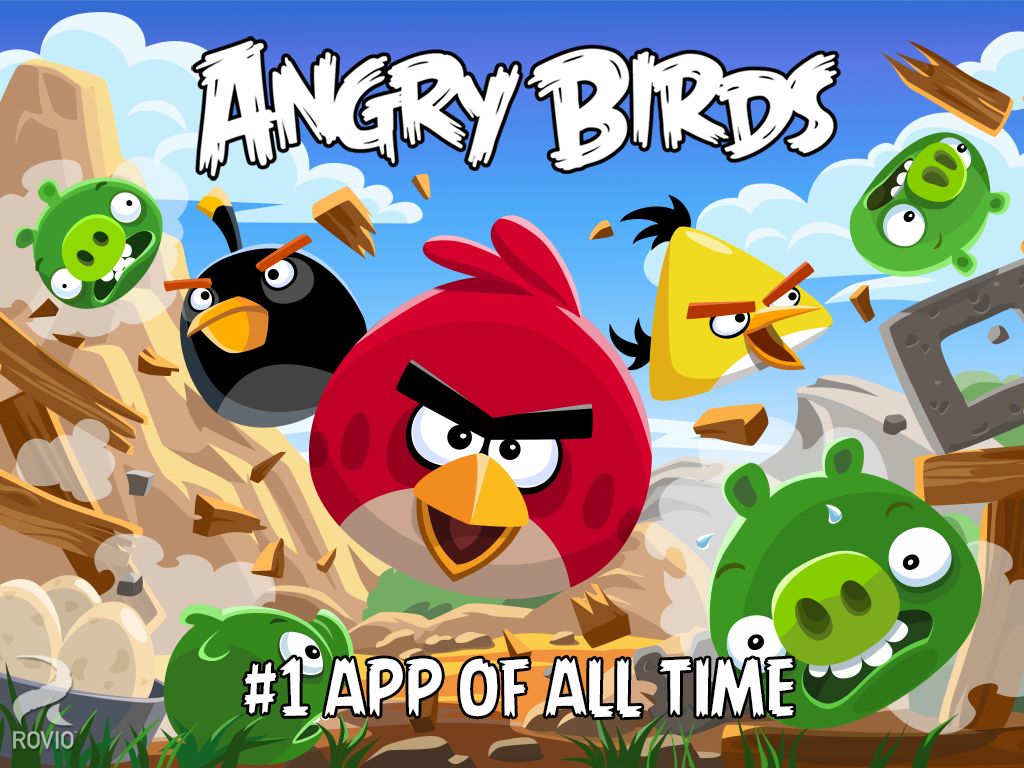
The most representative example of uncertainty is gonna be Angry Birds. I guess so far for any player no outcomes of two shots are exactly the same. The extreme uncertainty born from the unique game design has been the core feature of Angry Birds till now, which makes it so popular and engaging. The magic of uncertainty here is that most players could hardly feel tired or bored even they play the same level for many times. Surrounding this core, excellent visual and audio design, countless and diverse worlds and levels, interesting birds and strategies made the game a huge hit.
However, there are also very successful games that provide almost no uncertainty at all. One of my favorite classic RPG game was PAL, which was known to almost every Chinese game players, at least in my generation.

PAL was a Chinese ancient costume RPG game. It had such a beautiful story with vivid characters and engaging plots, touching music and graceful lines. I've played the game for maybe 10 times, from beginning to end. I was about 10 when I first played it, I remember that I even cried when my favorite character died in the story. The last time I played it was about 10 months ago, just to reminisce the irreplaceable tale and memory. Also I know that there has been a huge number of players who like PAL even more than I do.
PAL is one of the very few games in my life I believe that accomplished the highest level or game, or any kinds of publish or art. It reached the deepest place of audiences' soul, infused its value and changed audiences' philosophy, therefore became a part of their most unforgettable memory in their lives.
However, such a great game barely provided uncertainty only except for some random damage and items drops. Fixed beginning and ending, fixed maps and monsters, fixed characters and skills, even the order of learning new skills and the locations of hidden rare gears were fixed. But it provided unparalleled experience than any other RPG games.
As a conclusion, uncertainty is no doubt a very common and important factor for most kinds of games, but a game could also be a masterpiece without it. To make a game, designer should never try to deploy uncertainty for the sake of uncertainty, same for any other extrinsic factors like strategy, visual appeal, etc. Rather, they should always be auxiliary techniques surrounding the core value of the game to make it perfect.
"The outcome of a game has to be uncertain, otherwise it loses its appeal."
In the class that day we had a short discussion about uncertainty, which made me think more about it afterwards.
I have to say that I can't totally agree with this opinion. Indeed, uncertainty is a vital dimension to most games which to a degree makes the game unpredictable and variable, therefore the games are able to constantly provide new experience to keep players interested.
The most representative example of uncertainty is gonna be Angry Birds. I guess so far for any player no outcomes of two shots are exactly the same. The extreme uncertainty born from the unique game design has been the core feature of Angry Birds till now, which makes it so popular and engaging. The magic of uncertainty here is that most players could hardly feel tired or bored even they play the same level for many times. Surrounding this core, excellent visual and audio design, countless and diverse worlds and levels, interesting birds and strategies made the game a huge hit.
However, there are also very successful games that provide almost no uncertainty at all. One of my favorite classic RPG game was PAL, which was known to almost every Chinese game players, at least in my generation.
PAL was a Chinese ancient costume RPG game. It had such a beautiful story with vivid characters and engaging plots, touching music and graceful lines. I've played the game for maybe 10 times, from beginning to end. I was about 10 when I first played it, I remember that I even cried when my favorite character died in the story. The last time I played it was about 10 months ago, just to reminisce the irreplaceable tale and memory. Also I know that there has been a huge number of players who like PAL even more than I do.
However, such a great game barely provided uncertainty only except for some random damage and items drops. Fixed beginning and ending, fixed maps and monsters, fixed characters and skills, even the order of learning new skills and the locations of hidden rare gears were fixed. But it provided unparalleled experience than any other RPG games.
As a conclusion, uncertainty is no doubt a very common and important factor for most kinds of games, but a game could also be a masterpiece without it. To make a game, designer should never try to deploy uncertainty for the sake of uncertainty, same for any other extrinsic factors like strategy, visual appeal, etc. Rather, they should always be auxiliary techniques surrounding the core value of the game to make it perfect.
Saturday, January 25, 2014
How easy and simple should a good game be?
I had been wondering this question for a long time. I have tried and played many games of different types on different platforms since I was around 7 years old. I played them and enjoyed them, but hardly thought why I liked them. Till high school, when Angry Birds's thunder hit the world, I started to think about why.
Angry Birds was the very first game that made I realize that how simple and easy a game could be with still lots of fun. All you need to play the game is drag the birds on the slingshot, adjust and release. Surprisingly simple, also surprisingly fun.
Ever since that, I'd been especially interested in trying simple games for quite a while, I was fascinated by the easiness and effortlessness of playing those games. Meanwhile, it seemed that more and more game companies also started to pay attention to create simple fun games. Then Temple Run came as a hit, players around the worlds enjoyed it so much by just swiping on the screen and tilting the device. This time Temple Run brought some more exciting and intense experience which Angry Birds didn't really have.

After that, I downloaded Tiny Wings, I was once again astonished by how simple a good game can be - all you need to do is just to hold your finger on the screen and release at a proper time. This is probably the easiest game I've ever seen.

Consider all these games together, I realized that, as a high school boy, they all have one thing in common - the easiness is only for the players. The levels, the monsters, the power ups, everything behind the easiness are really delicate which seem to need lots of efforts to finish. So a simple but good game could probably be composed of not only extremely easy operation, nearly no learning curve, but also quite complicated and delicate "backend" design and implementation, as well as a great and creative idea. In other words, to begin with a good idea, do all the heavy works and save all the easiness and effortlessness for the players.
Angry Birds was the very first game that made I realize that how simple and easy a game could be with still lots of fun. All you need to play the game is drag the birds on the slingshot, adjust and release. Surprisingly simple, also surprisingly fun.
After that, I downloaded Tiny Wings, I was once again astonished by how simple a good game can be - all you need to do is just to hold your finger on the screen and release at a proper time. This is probably the easiest game I've ever seen.
Consider all these games together, I realized that, as a high school boy, they all have one thing in common - the easiness is only for the players. The levels, the monsters, the power ups, everything behind the easiness are really delicate which seem to need lots of efforts to finish. So a simple but good game could probably be composed of not only extremely easy operation, nearly no learning curve, but also quite complicated and delicate "backend" design and implementation, as well as a great and creative idea. In other words, to begin with a good idea, do all the heavy works and save all the easiness and effortlessness for the players.
Subscribe to:
Comments (Atom)