"The outcome of a game has to be uncertain, otherwise it loses its appeal."
In the class that day we had a short discussion about uncertainty, which made me think more about it afterwards.
I have to say that I can't totally agree with this opinion. Indeed, uncertainty is a vital dimension to most games which to a degree makes the game unpredictable and variable, therefore the games are able to constantly provide new experience to keep players interested.
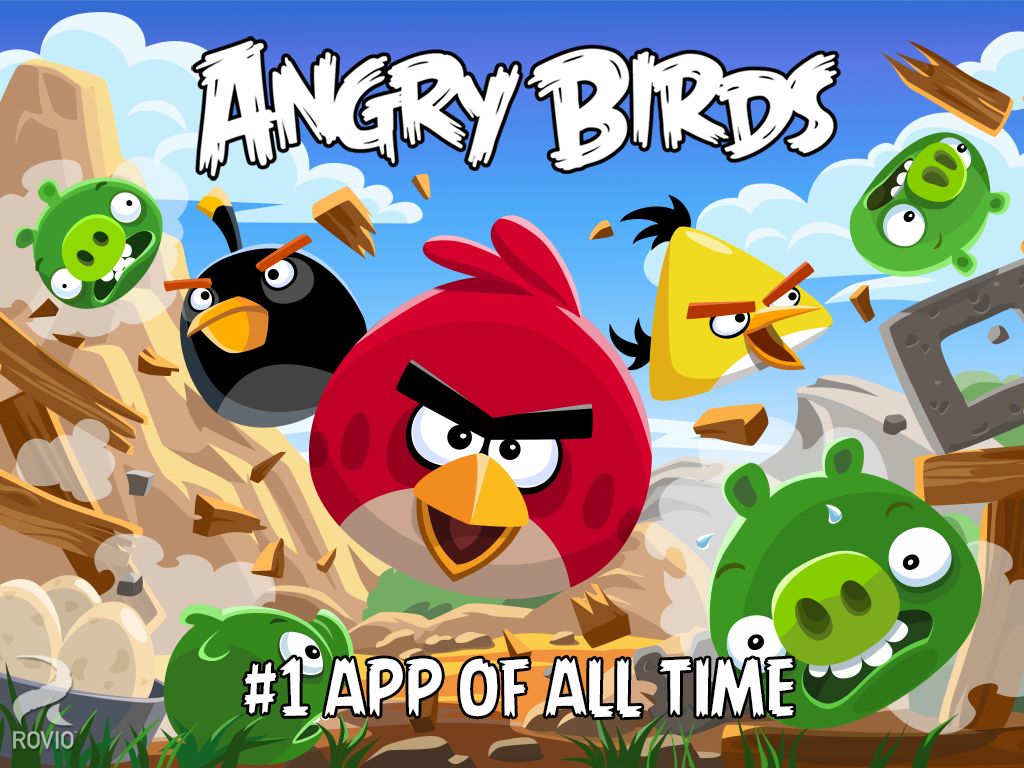
The most representative example of uncertainty is gonna be Angry Birds. I guess so far for any player no outcomes of two shots are exactly the same. The extreme uncertainty born from the unique game design has been the core feature of Angry Birds till now, which makes it so popular and engaging. The magic of uncertainty here is that most players could hardly feel tired or bored even they play the same level for many times. Surrounding this core, excellent visual and audio design, countless and diverse worlds and levels, interesting birds and strategies made the game a huge hit.
However, there are also very successful games that provide almost no uncertainty at all. One of my favorite classic RPG game was PAL, which was known to almost every Chinese game players, at least in my generation.

PAL was a Chinese ancient costume RPG game. It had such a beautiful story with vivid characters and engaging plots, touching music and graceful lines. I've played the game for maybe 10 times, from beginning to end. I was about 10 when I first played it, I remember that I even cried when my favorite character died in the story. The last time I played it was about 10 months ago, just to reminisce the irreplaceable tale and memory. Also I know that there has been a huge number of players who like PAL even more than I do.
However, such a great game barely provided uncertainty only except for some random damage and items drops. Fixed beginning and ending, fixed maps and monsters, fixed characters and skills, even the order of learning new skills and the locations of hidden rare gears were fixed. But it provided unparalleled experience than any other RPG games.
As a conclusion, uncertainty is no doubt a very common and important factor for most kinds of games, but a game could also be a masterpiece without it. To make a game, designer should never try to deploy uncertainty for the sake of uncertainty, same for any other extrinsic factors like strategy, visual appeal, etc. Rather, they should always be auxiliary techniques surrounding the core value of the game to make it perfect.

When you say that the game barely provided any uncertainty, and say that it has a fixed introduction and ending, I think you might have misinterpreted the meaning of uncertainty that the quote "The outcome of a game has to be uncertain, otherwise it loses its appeal." was trying to portray.
ReplyDeleteIn the quote, from my own understanding, uncertainty stems from not knowing what is going to happen next. A game having a fixed story line, characters, skills and environment does not make it not certain. The very first time you played the game is already had some uncertainty in it, in that you didn't know how the story would pan out, and that it itself is enough to keep you engaged.
I agree with you that not all games rely on uncertainty, but I cannot fully agree with you that a game can be a masterpiece without uncertainty. The simple truth is that, when you know exactly what is going to happen (you are going to kill this monster at this particular spot and you are going get away with this amount of health at the end), the game would not be as appealing as it would be.
Hi Mingxun, thanks for your comments!
DeleteLike you said, it is indeed "uncertain" when I first played PAL, in a way like I first watched a movie or read a book. But I'd hesitate to consider a movie or a book as uncertain.
Further, the "uncertainty" of a game that I understand is kind of like the variability of it - the outcome changes even with exactly the same setting and beginning, like Angry Bird, Counter Striker, Battlefield, etc. It is the key feature for most games that keeps players engaged and repetitively play the games over and over again without feeling bored.
For PAL, many players have played it many times, with everything known (except some random damage and item drops, like I said) after they played it for the first time. But people including me still enjoy it a lot, just like watch a favorite movie over and over again.
Undoubtedly, taste is a quite personal thing. For its fans, I do regard PAL as a masterpiece of whatever form it can be considered - a game, a story, a
movie, or a piece of digital art.
Maybe in a degree I mixed up the meaning of uncertainty and variability since I'm not a ETC student and haven't learned much about games. If I do, please don't hesitate to correct me.
I'm learning a lot from the discussion with you.
Thanks again for your comment!
I think I would agree with mingxun on this point; the uncertainty in linear games first comes from the story and the initial playthrough. After you've learned how to beat it, the uncertainty comes from the act of playing the game itself.
DeleteI haven't played PAL, but I think I have played games similar to its format. From the Wikipedia page, it looks like most of the gameplay in PAL stems from mazes and turn-based combat. While the story does not change and most of the elements stay the same, I would argue that the fact that you do not know if you will die in the turn-based combat is a form of uncertainty.
I would also argue that when you play the game for the first time, there is plenty of uncertainty. You do not know that the heroes will win the game, you don't know how to solve the puzzles, and while you may have a feeling from previous story experience that the good guys will win, you don't know how they will get there.
If the game is so good that you still enjoy playing it after you have beaten the game and the majority of the uncertainty has been removed, then that definitely means that the story is an excellent one and that it can largely stand for itself. I wouldn't say that it never had uncertainty; I would say instead that the uncertainty has largely been replaced by affection for the story but still exists in the combat.
Mingxun has already expounded on the granularity of the term "uncertainty". But if we take it at such a base level, then any game with interaction can be said to be uncertain (very similar to quantum phenomena: the act of observing disturbs the observation). Having not played PAL, I cannot judge how relevant it is to this game, but I do agree that uncertainty is not necessary for a great game.
ReplyDeleteWhile uncertainly is definitely a desirable attribute, some games are certainly more "certain" than others. Often, I play some games for some "certain" moments more so than its uncertain ones. Off the top of my head, the best example would be Shadow of the Colossus. I would repeatedly play the game, not for the uncertainty in the battles with the Colossi, but rather to experience and enjoy the "flow" of the moments when you're flying of the back of the fourth bird colossus. Other such example that immediately come to mind are the discovery of the Flood in Halo, and the twist in Knights of the Old Republic.